Do You Need a Stair Gate? When and Where to Fit One
Stairs are the obvious place, but not the only one. Here's where gates make the biggest safety difference, and how to pick the right type.

Falls are one of the most common causes of injury in young children, and stairs are a significant part of that picture — RoSPA and child safety organisations consistently recommend fitting a stair gate as soon as your baby starts crawling, typically 6-10 months, well before they're mobile enough to reach the stairs unsupervised.
Where to fit one, beyond the stairs
- Top and bottom of the stairs — a gate at the top is more important for injury severity, but a gate at the bottom is worth it too, since a determined crawler can still get partway up.
- The kitchen doorway, if the kitchen has hazards like a hot oven, sharp knives in reach, or cleaning products in a low cupboard.
- Any room with a fireplace, hot radiator, or fragile furniture your toddler shouldn't have unsupervised access to.
Types of gate
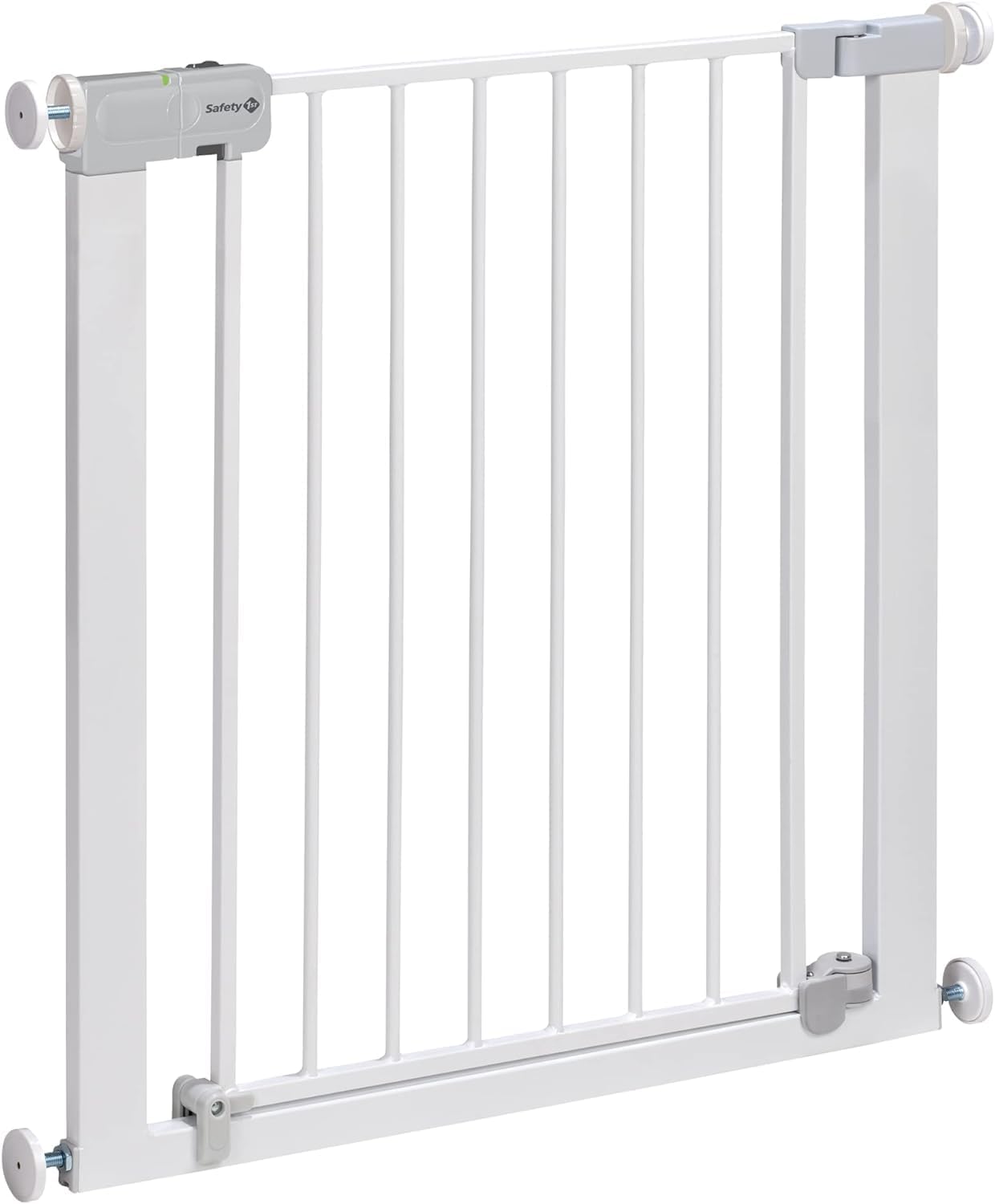
- Pressure-fit gates (like the Safety 1st Simply Secure) grip between two walls or a wall and banister without screws, which is ideal for rented homes or doorways you don't want to drill into. The trade-off: they're not recommended at the top of stairs, since a strong push could dislodge one over a drop.
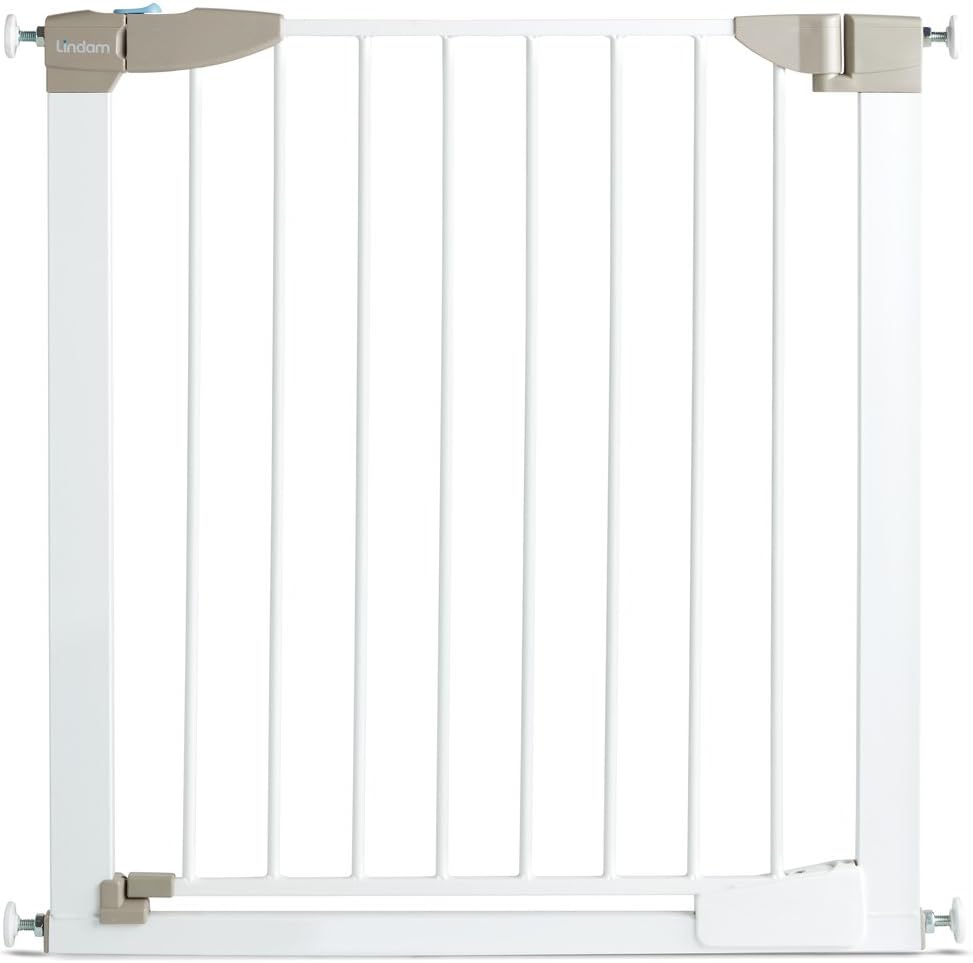
- Screw-fit gates (like the BabyDan Guard Me or Lindam Easy Fit Plus) are more securely fixed and are the recommended choice at the top of stairs specifically because of that extra security.
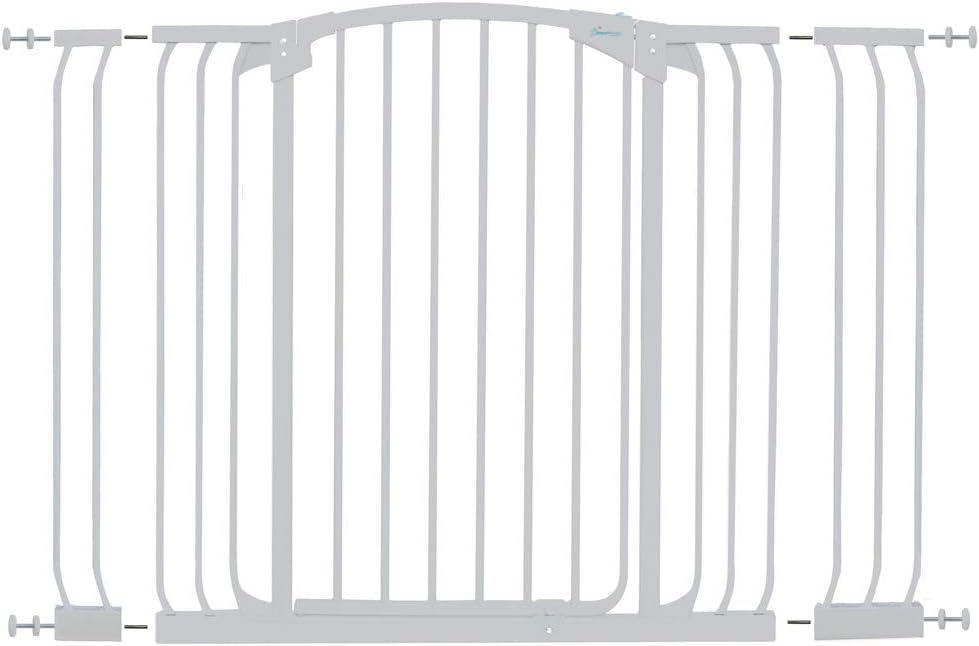
- Extra-tall or extra-wide gates (like the Dreambaby Chelsea Xtra-Tall) suit wider stairwells, unusually tall toddlers who might otherwise climb over a standard-height gate, or households wanting a taller barrier for peace of mind.
Getting the fit right
Measure the opening before buying — most gates cover a base range with an extension kit for wider gaps, and an incorrectly sized gate (or one wedged in with excessive force to fit) is less secure than a properly sized one. Check that any gate you buy meets BS EN 1930, the relevant British/European safety standard for child safety barriers.
When to stop using them
Most families remove stair gates somewhere between 2 and 3 years old, once a toddler can reliably and safely climb stairs with a handrail and understands not to go up or down unsupervised — this is a judgement call based on your individual child's coordination and understanding, not a fixed age.
Mentioned in this guide
Frequently asked questions
When should I fit a stair gate?+
As soon as your baby starts crawling, typically 6-10 months, and well before they can reach the stairs unsupervised.
Should I use a pressure-fit or screw-fit gate at the top of the stairs?+
Screw-fit gates are the recommended choice at the top of stairs specifically because they are more securely fixed. Pressure-fit gates are suitable elsewhere in the home, including the bottom of the stairs.
What safety standard should a stair gate meet?+
Look for compliance with BS EN 1930, the British/European safety standard for child safety barriers, on the packaging or product listing.
Sources

Written by
Sepehr
Software engineer, soon-to-be dad, uncle to four — the tech-obsessed half of the two of us testing this stuff. Currently building this site with my wife, ahead of our own baby arriving.