Pressure-Fit vs Screw-Fit Stair Gates: Which Do You Need?
Getting this wrong at the top of the stairs is a genuine safety issue, not just a convenience trade-off.
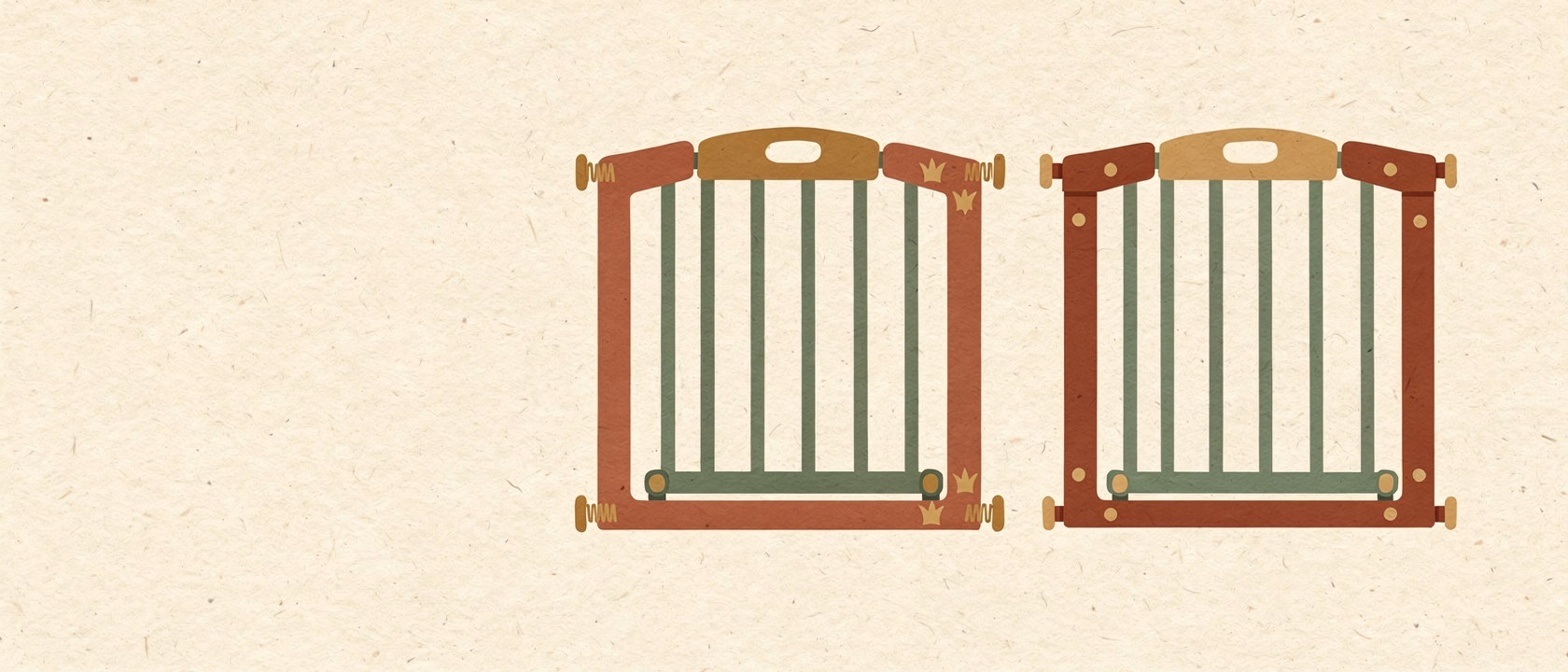
Stair gates split into two mounting types, and the difference between them isn't just installation convenience — it affects where each type is safe to use.
Pressure-fit gates
These wedge into a doorway or stair opening using spring tension against the walls or banister, with no drilling required. They're quick to fit, easy to remove, and don't damage walls or woodwork — a genuinely good fit for doorways between rooms, or at the bottom of stairs.
The catch: because they rely on friction, a determined push, a knock, or gradual loosening over time can dislodge them. That's an acceptable risk at the bottom of stairs (a fall from ground level), but not at the top.
Screw-fit (hardware-mounted) gates
These bolt directly into the wall or banister, giving a permanently secure fixing that can't be pushed loose. They take longer to install and leave small screw holes when removed, but they're the only type recommended for the top of stairs, where a gate failing means a fall from height.
The rule of thumb
- Top of stairs: screw-fit only. Non-negotiable, regardless of how sturdy a pressure-fit gate feels.
- Bottom of stairs, or between rooms: either works — pressure-fit is usually more convenient since you're not committing to permanent fixings.
- Awkward openings (bay windows, angled banisters, very wide gaps): check the specific gate's fitting range before buying — this is where most returns happen.
Other things worth checking before buying
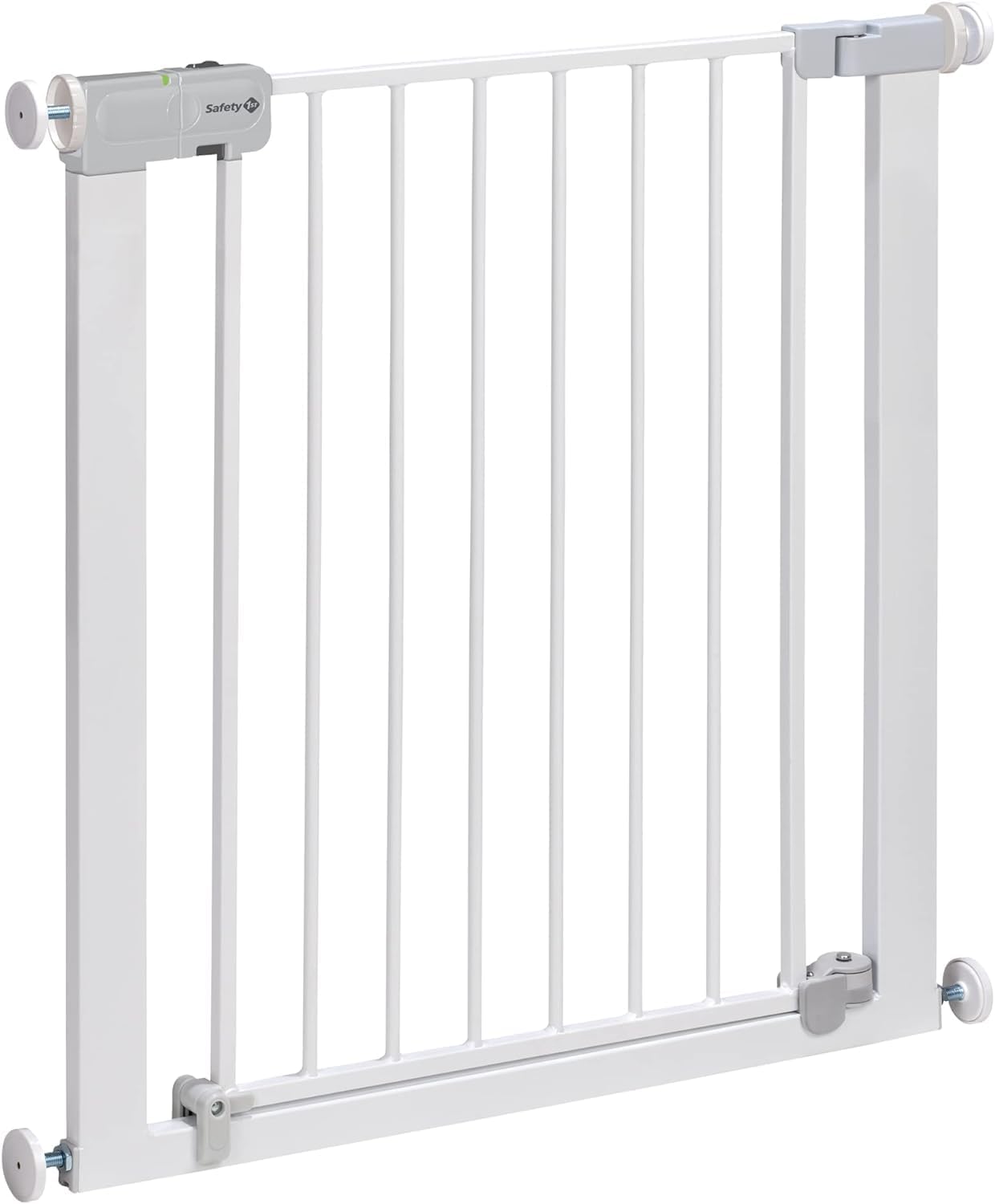
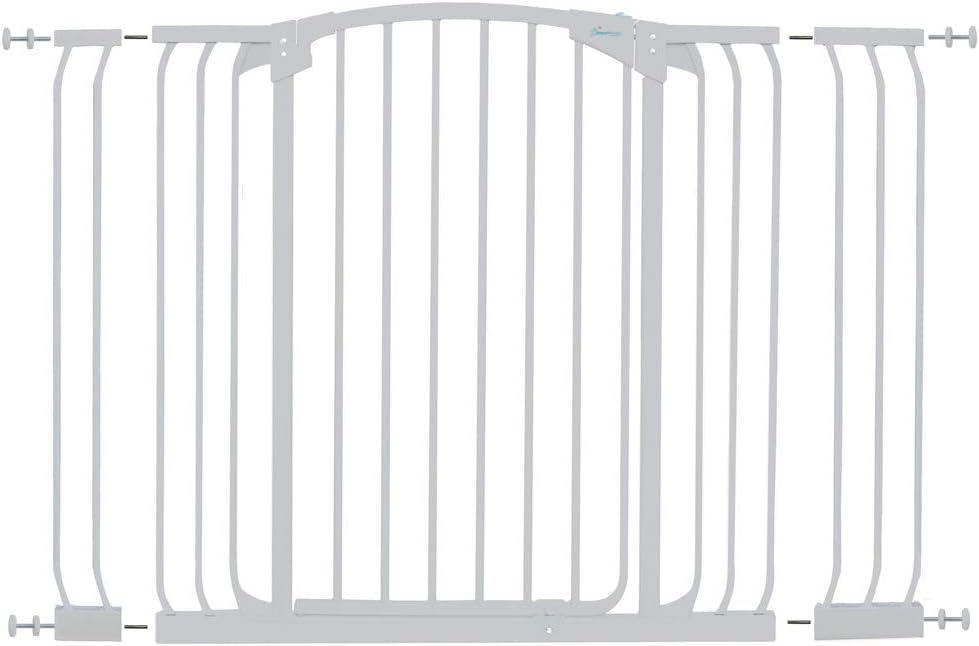
- Opening width range — most gates state a min/max width, sometimes extendable with additional panels for wider gaps.
- One-handed opening — genuinely useful when you're carrying a baby or a laundry basket through multiple times a day.
- Auto-close
- Gate height — taller gates (75cm+) matter more once your toddler is climbing rather than just pushing.
Our recommendation
Buy one screw-fit gate for the top of the stairs without compromise, and choose pressure-fit for anywhere else based on convenience and how often you'll be removing it. Don't let a slightly higher price or a longer install time push you toward a pressure-fit gate at the top of the stairs — this is one of the few baby products where the wrong choice has a genuinely serious downside.
Mentioned in this guide
Frequently asked questions
Can I use a pressure-fit gate at the top of the stairs if I check it regularly?+
No — this isn't recommended regardless of how often you check it, since the risk is a sudden dislodging (a push or knock) rather than gradual, checkable loosening. Screw-fit is the safe standard for the top of stairs.
Do screw-fit gates damage walls?+
They leave small screw holes when removed, which are easy to fill, but there's no way to fit one without some drilling.
What width stair gate do I need?+
Measure your opening before buying — most gates list a fitting range (e.g. 73–80cm) and offer extension panels for wider gaps, so check this against your specific measurement rather than assuming standard width.
Sources

Written by
Sepehr
Software engineer, soon-to-be dad, uncle to four — the tech-obsessed half of the two of us testing this stuff. Currently building this site with my wife, ahead of our own baby arriving.