Safe Sleep for Newborns: The NHS Guidance Explained
There are five safe sleep rules that meaningfully reduce SIDS risk. Here's what each one means in practice, and why the small details matter as much as the big ones.
Safe sleep advice can feel like a long list of rules with no explanation attached. Here's the reasoning behind each one, because understanding why makes them far easier to actually follow at 3am.
The five things that matter most
1. Always place your baby on their back to sleep
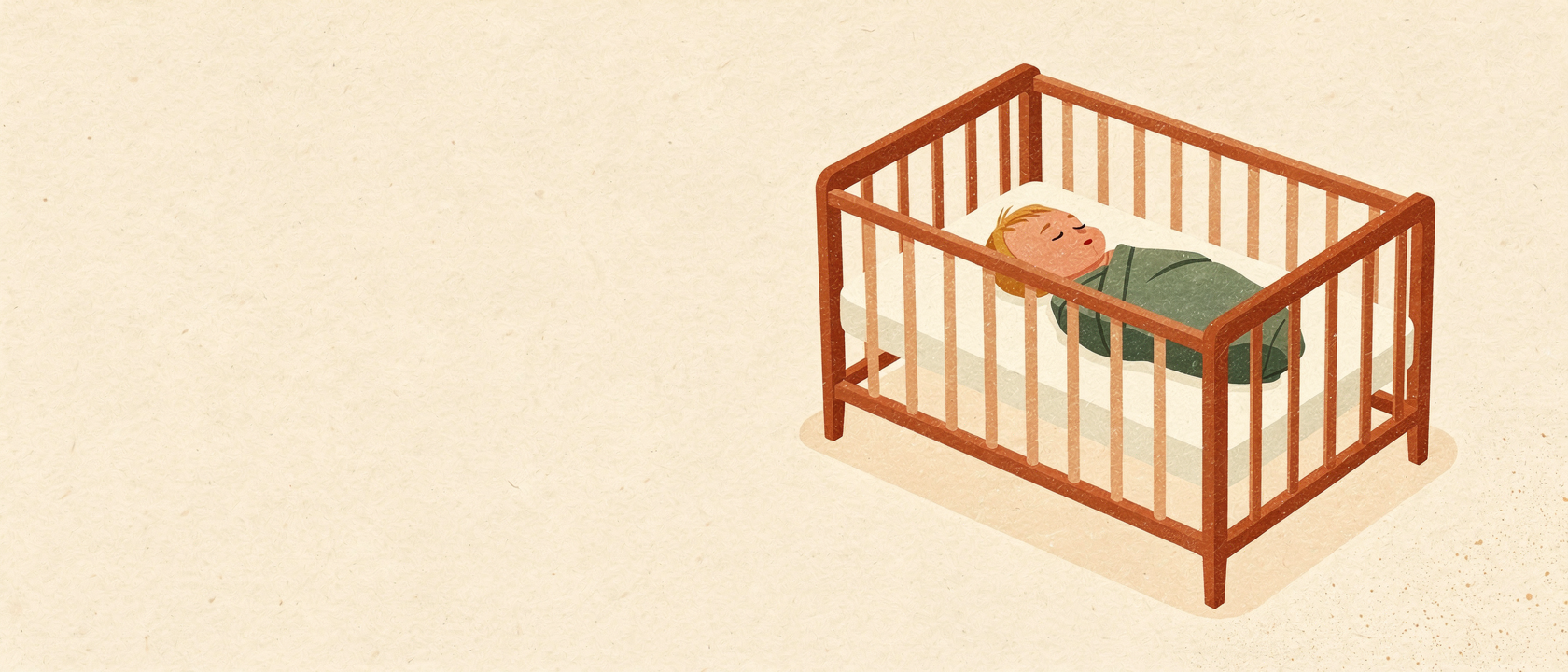
This is the single biggest factor in reducing sudden infant death syndrome (SIDS) risk, for every sleep — naps included, not just at night. Once your baby can roll both ways on their own, it's fine if they roll onto their front during sleep, but you should still always place them on their back to start with.
2. Room share for the first 6 months
The NHS recommends your baby sleeps in the same room as you for at least the first 6 months, in their own separate, flat sleep surface — a cot, crib or Moses basket, not your bed and not a sofa. This is linked to a substantially lower SIDS risk than a baby sleeping in a separate room.
3. Keep the cot clear
No pillows, no duvets, no cot bumpers, no soft toys in with a young baby. A firm, flat, waterproof mattress in good condition, and a well-fitting sheet, is all a newborn's sleep space needs. Loose bedding and soft items increase suffocation and overheating risk.
4. Don't let your baby get too hot
Overheating is itself a SIDS risk factor. A room temperature of around 16–20°C is comfortable for most babies; a room thermometer takes the guesswork out of it. As a rule of thumb, dress your baby in one more layer than you'd wear yourself, and use a baby sleeping bag of the appropriate tog rating rather than loose blankets.
5. Never sleep with your baby on a sofa or armchair
Falling asleep with your baby on a sofa carries a much higher SIDS risk than bed-sharing, largely because of the risk of your baby becoming trapped in the cushions. If there's any chance you might doze off while feeding or settling your baby, do it somewhere you'd be safe if you did — ideally your bed, with any pillows and duvets moved well away from your baby.
What about bed-sharing?
The NHS doesn't say bed-sharing is never acceptable, but it does set out when it becomes considerably higher risk: if you or your partner smoke, have been drinking alcohol, have taken drugs or medication that makes you drowsy, or if your baby was born prematurely or at a low birth weight. Outside of those factors, some parents do choose to bed-share and reduce risk by keeping the bed free of pillows/duvets near the baby and ensuring the baby can't fall out or get trapped against a wall or headboard.
A well-fitted sleeping bag makes the rules easier to follow
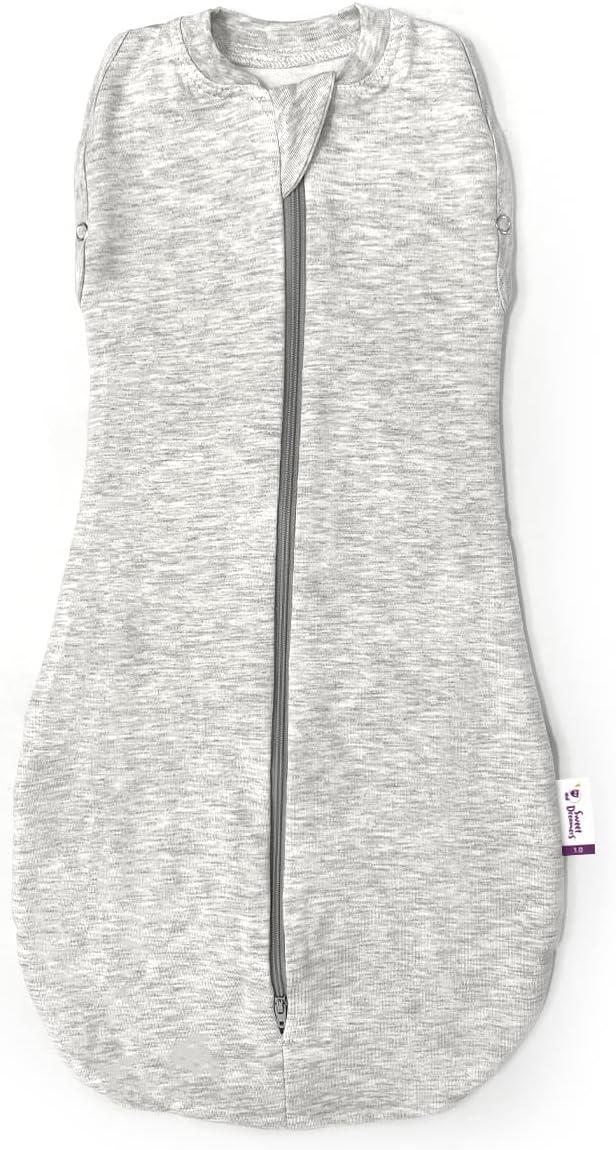
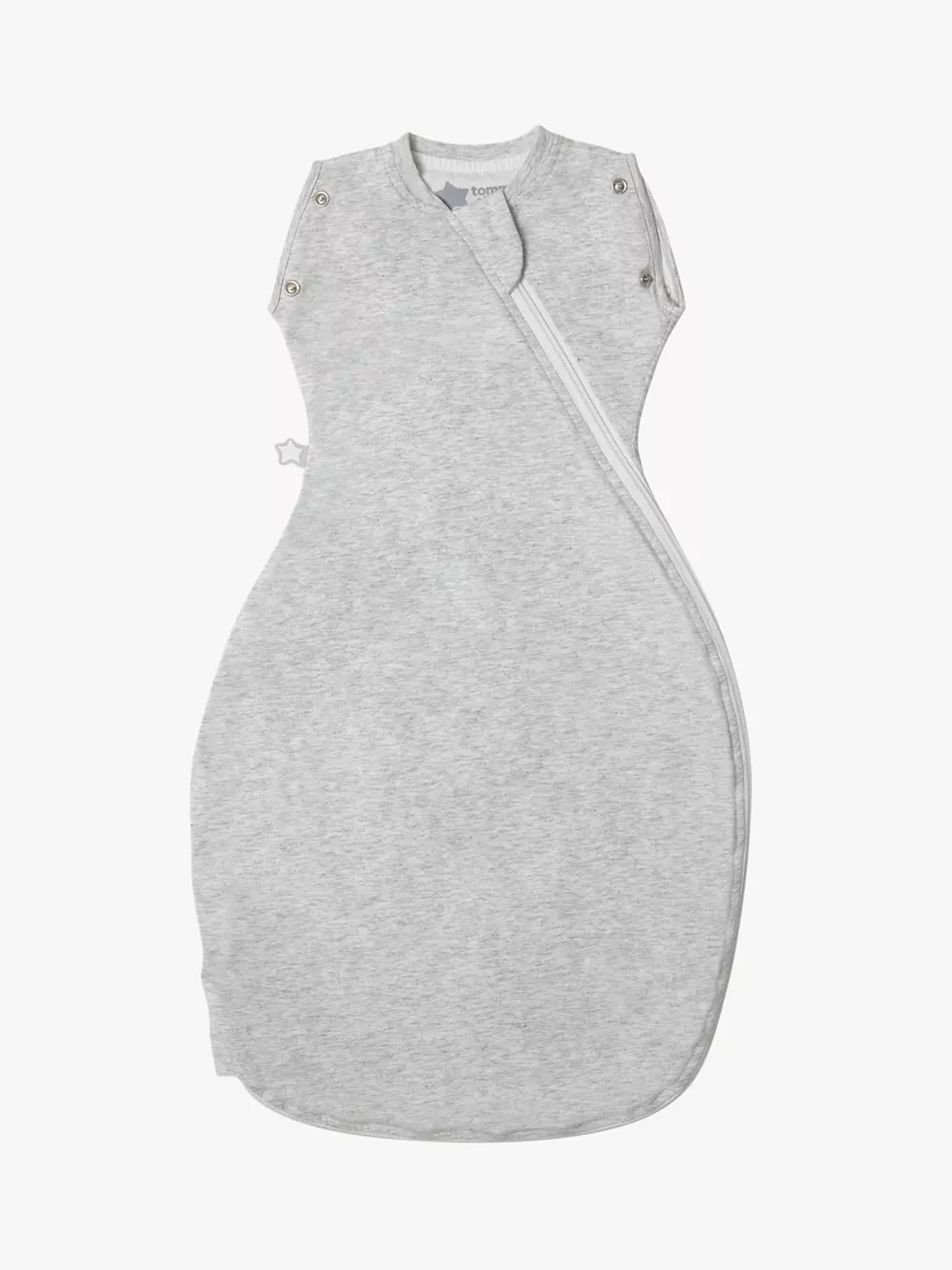
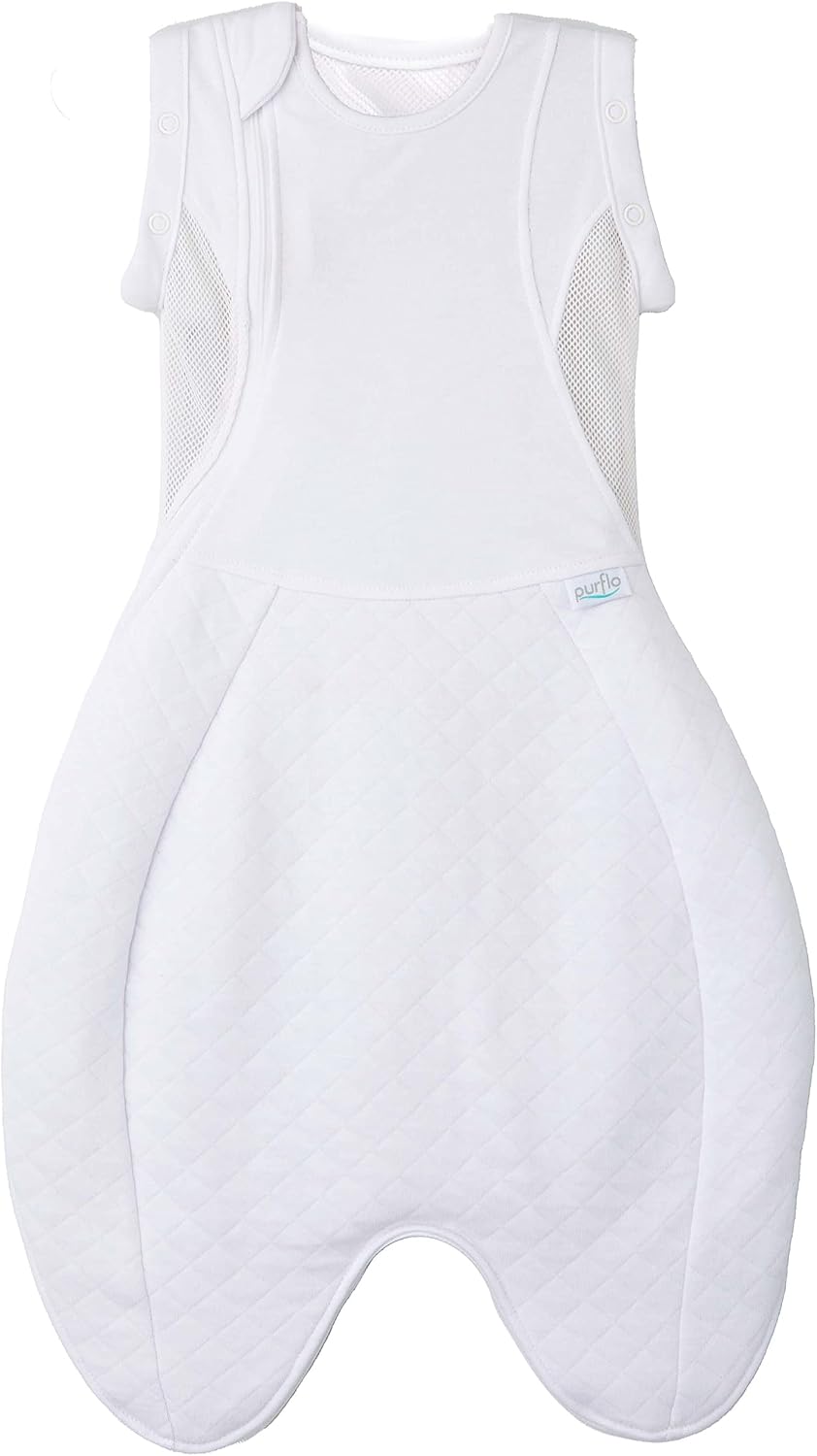
A tog-rated baby sleeping bag solves two safe-sleep problems at once: it removes the temptation to add loose blankets, and it makes overheating easier to judge, since tog ratings map onto room temperature. Look for a fitted neck and armholes so your baby can't slip down inside it during the night.
When to get medical advice
See a GP or health visitor if your baby is unusually difficult to wake, feels hot or sweaty, has a rash, or their breathing seems laboured. Trust your instincts — you know your baby's normal better than any checklist.
Mentioned in this guide
Frequently asked questions
Is it safe to use a cot bumper?+
The NHS advises against cot bumpers for babies under 12 months, as they add a suffocation and overheating risk without a proven safety benefit.
When can I stop room sharing?+
The NHS recommends room sharing for at least the first 6 months. Many parents continue longer; there's no fixed cut-off, it's a minimum, not a deadline.
What tog sleeping bag should I use?+
It depends on room temperature: roughly 2.5 tog for 16-20°C rooms, and lighter (0.5-1 tog) for warmer rooms. Check the specific bag's guidance, as tog-to-temperature mapping varies slightly by brand.
Sources

Written by
Sepehr
Software engineer, soon-to-be dad, uncle to four — the tech-obsessed half of the two of us testing this stuff. Currently building this site with my wife, ahead of our own baby arriving.