Sleep Regressions: What's Actually Happening at 4 and 8 Months
Nothing is going wrong. Your baby's sleep architecture is maturing, and that temporarily makes sleep worse before it gets better.
"Sleep regression" sounds like something has broken. What's actually happening, at both the well-documented 4-month and 8-month points, is a maturing nervous system temporarily making sleep less consolidated, not less needed.
The 4-month regression: a real, permanent shift
Around 4 months, a baby's sleep architecture changes from newborn sleep (which drops quickly and deeply into a simple two-stage cycle) into a more adult-like structure with distinct light and deep sleep stages, cycling roughly every 45–50 minutes. Between cycles, babies briefly wake or stir — something newborns did far less. This is a permanent developmental shift, not a temporary phase that reverses, which is why the 4-month change often marks the point where a baby needs to properly learn to settle back to sleep independently between cycles, rather than the disruption simply fading on its own.
The 8-month regression: developmental, not architectural
The 8-month dip has a different cause: this is peak territory for major developmental leaps — sitting, crawling, pulling to stand, separation anxiety becoming more pronounced, and often a first tooth. Any one of these can disrupt settled sleep temporarily; several arriving close together compounds it. Unlike the 4-month shift, this one usually does resolve on its own within a few weeks as the skill or phase settles.
What genuinely helps
- Consistent wind-down routine — same order of steps each night (bath, feed, story, cot) helps cue sleep regardless of what's causing the disruption.
- A safe, calm sleep environment — the NHS safer sleep guidance (baby on their back, feet to foot of cot, clear cot, room temperature around 16–20°C) matters more during unsettled phases, when you're more likely to be tired and cutting corners.
- Patience with the 4-month shift specifically. Because it's a genuine architectural change rather than a temporary phase, expecting a quick return to "how it was" sets you up for frustration — the goal is helping your baby learn to resettle within the new sleep pattern, not waiting it out.
- Daytime nap consistency. Overtiredness makes any regression harder; protecting reasonably regular daytime naps helps night sleep more than it might seem.
When it's not "just" a regression
If disrupted sleep comes with a fever, poor feeding, reduced wet nappies, or your baby seems generally unwell rather than simply unsettled, treat it as a health question and speak to your GP or health visitor rather than assuming it's developmental.
Mentioned in this guide


Frequently asked questions
How long does the 4-month sleep regression last?+
The underlying sleep architecture change is permanent, not temporary, but most families see the acute disruption settle within a few weeks as their baby learns to link sleep cycles again.
Is white noise safe to use all night?+
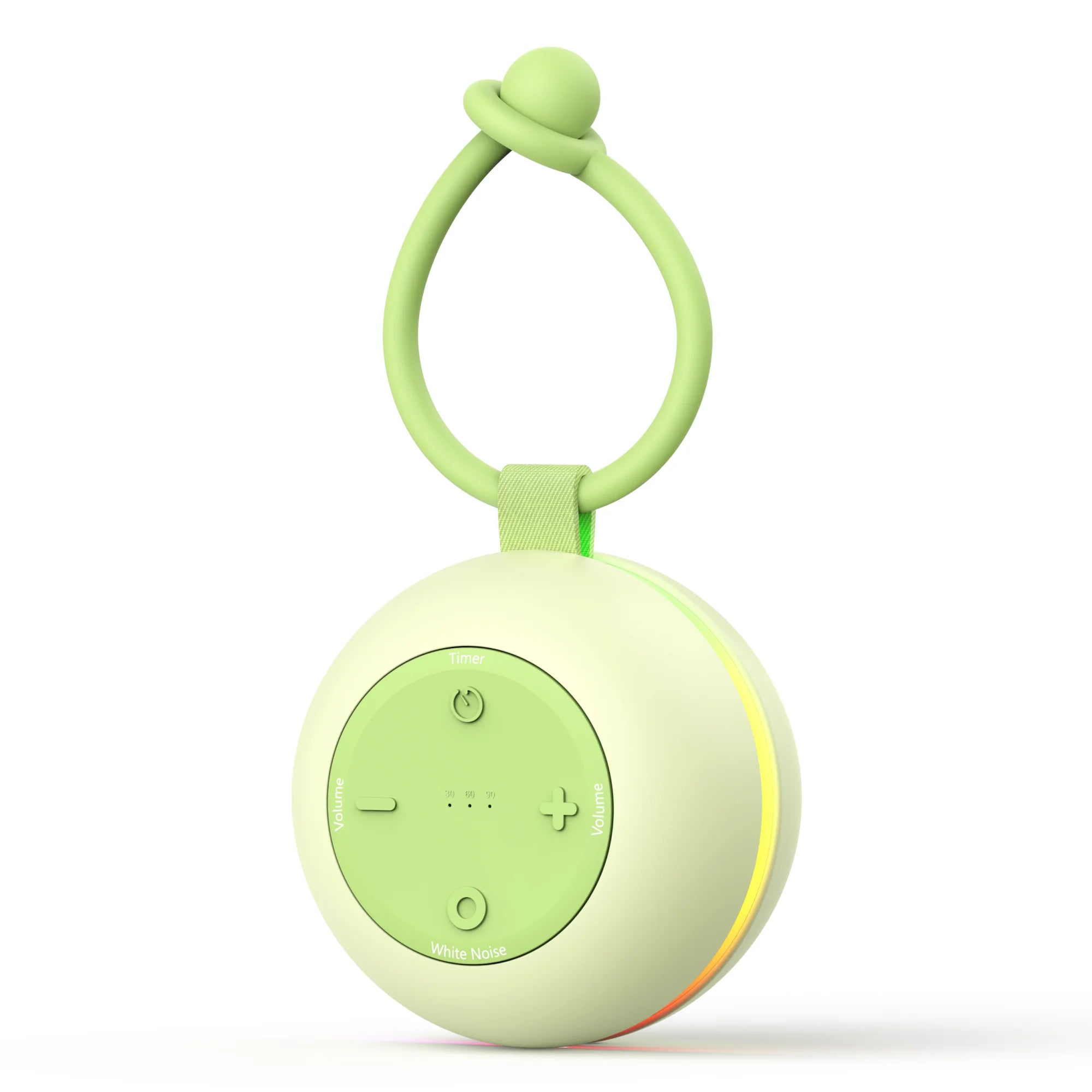
Yes, provided the volume is kept moderate (roughly the level of a shower) and the device is placed a safe distance from the cot, per general safe-sleep product guidance.
Should I go back to swaddling during a regression?+
Swaddling should stop once a baby shows signs of rolling, regardless of a regression, as continuing after this point is a recognised safety risk. A sleep bag is a safer alternative for babies who are rolling or close to it.
Sources

Written by
Sepehr
Software engineer, soon-to-be dad, uncle to four — the tech-obsessed half of the two of us testing this stuff. Currently building this site with my wife, ahead of our own baby arriving.