How Often Should a Newborn Feed?
There's no fixed feeding schedule for newborns — and that's by design. Here's what a normal range actually looks like, breast or bottle.

If you're counting feeds and comparing to a chart, the honest answer is: the range is wide, and "normal" varies a lot baby to baby. The NHS recommends feeding on demand — responding to your baby's hunger cues rather than a fixed clock — especially in the early weeks.
What a typical range looks like
Most newborns feed 8–12 times in 24 hours in the first few weeks, roughly every 2–3 hours, though breastfed babies often feed more frequently than that and formula-fed babies can sometimes go a bit longer between feeds because formula digests slightly more slowly. Cluster feeding — several feeds close together, often in the evening — is common and normal, not a sign of low supply.
Hunger cues to watch for
- Rooting (turning head, opening mouth toward touch on the cheek)
- Sucking on hands or fists
- Smacking or licking lips
- Crying — this is a late hunger cue; feeding before it gets to crying is usually easier for both of you
For formula-fed babies specifically
Rough volume guidance is around 150ml per kg of body weight per 24 hours, split across feeds, but this varies and your health visitor will confirm what's right for your baby based on weight gain, not a generic formula. Overfeeding is possible with a bottle in a way it generally isn't with breastfeeding, so following your baby's fullness cues (turning away, slowing down, spitting the teat out) matters more than finishing every bottle.
When frequent feeding is worth mentioning to your health visitor
Feeding very frequently combined with poor weight gain, persistent unsettled behaviour after feeds, or fewer than 6 wet nappies a day after the first week is worth flagging — not because it's necessarily a problem, but because it's the kind of pattern your health visitor is best placed to assess against your specific baby's growth.
When feeding frequency naturally settles
Most babies start to space feeds out and develop a more predictable (though rarely rigid) pattern somewhere between 6 and 12 weeks, as stomach capacity increases. This is a gradual shift, not a switch that flips on a particular day.
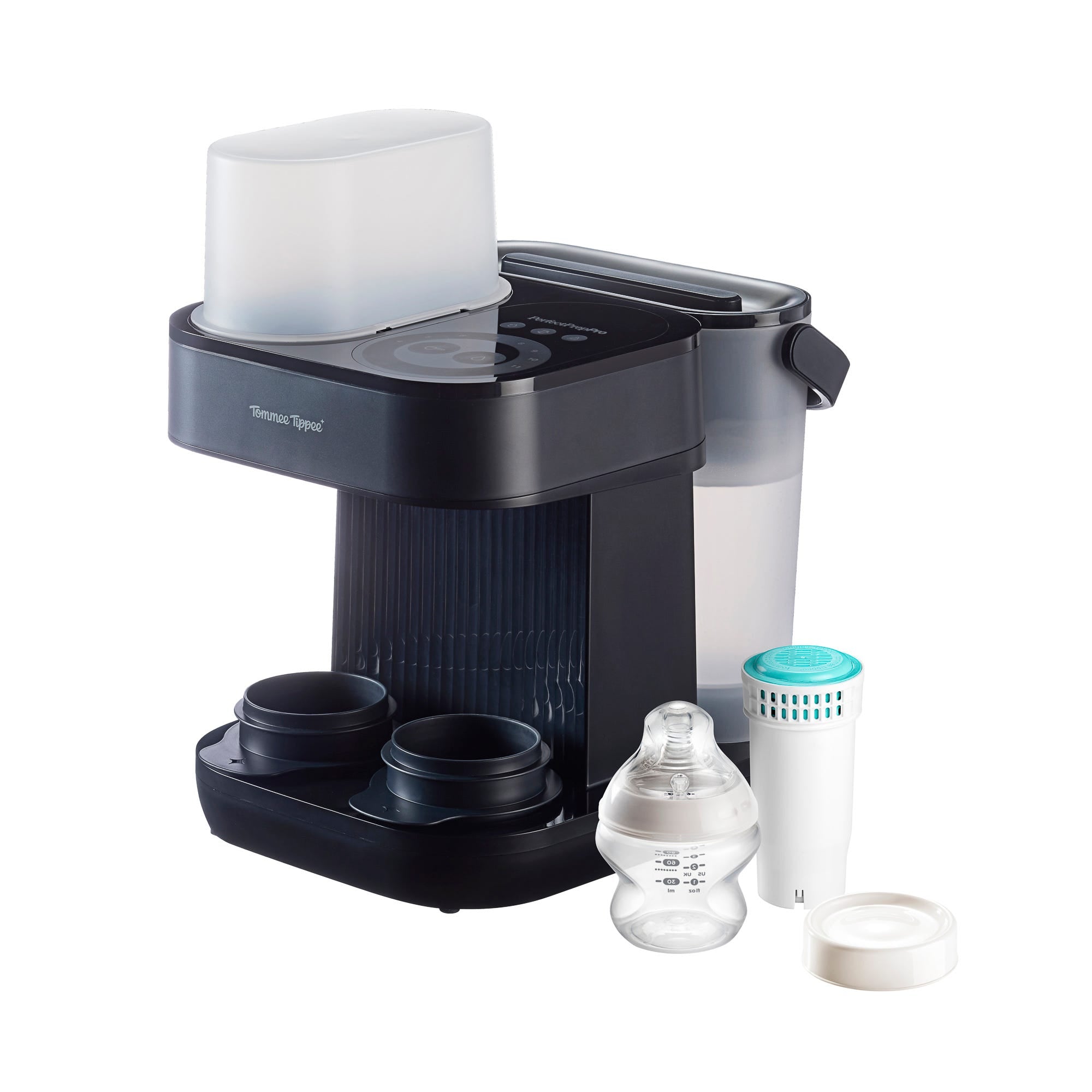
Mentioned in this guide


Frequently asked questions
Is it normal for a newborn to feed every hour?+
Yes, particularly during cluster feeding periods, commonly in the evenings. It doesn't necessarily mean low milk supply — it's a normal pattern for many babies.
Should I wake a sleeping newborn to feed?+
In the first couple of weeks, yes — most guidance suggests waking a newborn if more than 4 hours pass without a feed, until weight gain is well established. Ask your midwife or health visitor about your specific baby.
Can a newborn be overfed on formula?+
Yes, more easily than with breastfeeding. Watch for fullness cues — turning away, slowing, pushing the teat out — rather than encouraging your baby to finish every bottle.
Sources

Written by
Sepehr
Software engineer, soon-to-be dad, uncle to four — the tech-obsessed half of the two of us testing this stuff. Currently building this site with my wife, ahead of our own baby arriving.